Image



December 11, 1972 marked the first and last time that any country on Earth made a soft landing on the lunar surface with humans on board.
The Apollo 17 mission marked the end of the Space Race, a turning point in the Cold War, and became a national symbol of American patriotism as well as global perseverance in the advancing of science, technology, and exploration.
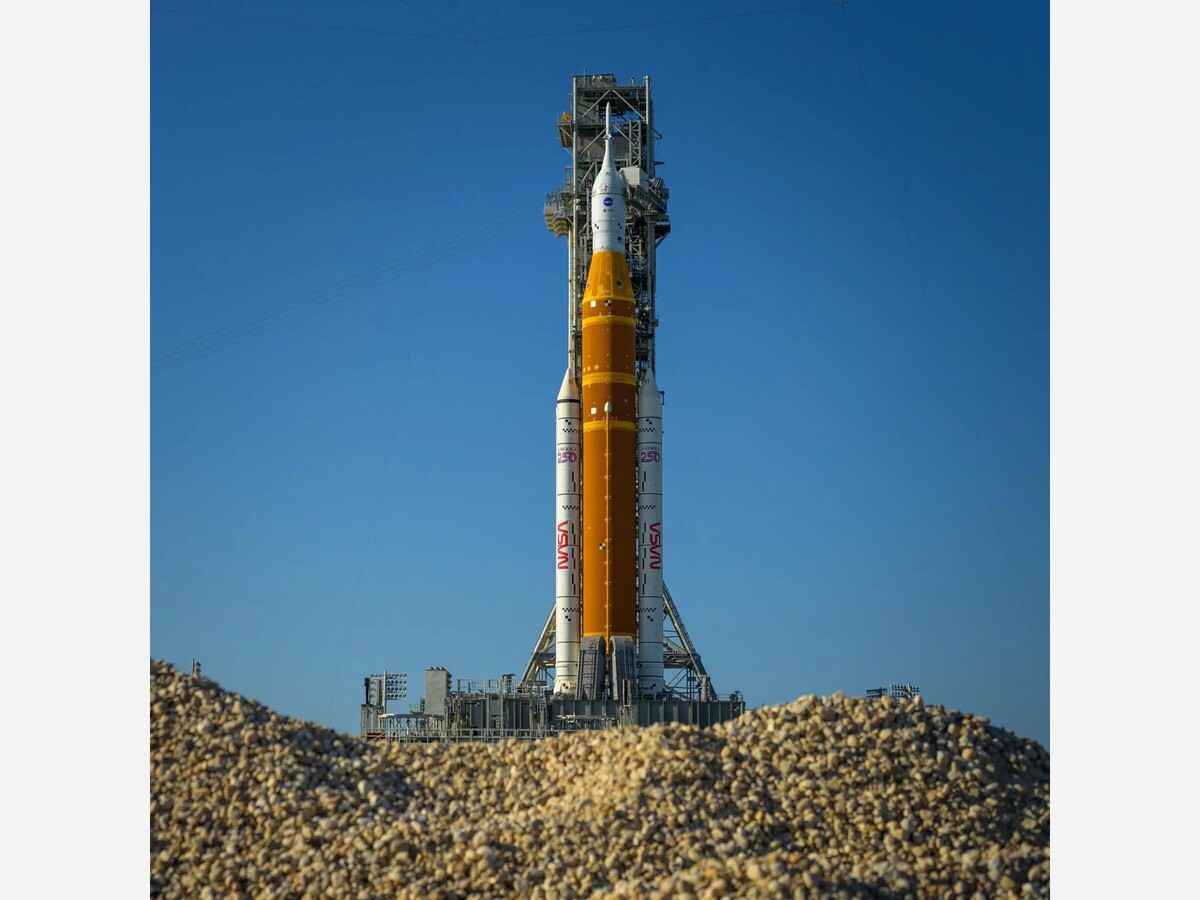
For nearly 50 years, the crewed missions to explore our moon came to a halt, but in 2022, Artemis I was launched. Artemis I was the inaugural 25-day uncrewed flight that evaluated NASA’s Space Launch System and took the first steps towards doing what once seemed implausible: returning humans to the Moon. On April 1, 2026, NASA completed the second out of four steps to achieving this goal.
Artemis II is currently underway. It launched from Kennedy Space Center, and is expected to last ten days. The mission is crewed by four astronauts: Reid Wiseman, Victor Glover, and Christina Koch of NASA, along with Jeremy Hansen from the Canadian Space Agency.
The mission marks the halfway point in NASA's plan to land humans on the Moon with Artemis IV. Artemis II is a test flight that will orbit the Moon and return to Earth, similar to the Apollo 8 mission in 1968. However, Artemis II is planned to follow a free-return trajectory similar to Apollo 13. This means that the spacecraft will rely on the Moon’s gravity and its own momentum to return to Earth.
The Artemis II mission also represents several milestones: Koch will be the first woman to travel beyond low Earth orbit, Glover the first person of color, Wiseman the oldest astronaut to do so, and Hansen the first non-U.S. citizen.
Overall, Artemis II is a critical step forward in ensuring that humans will return to the Moon. If all goes according to plan, Artemis III will launch in mid-2027, with plans of testing the docking capabilities of the Orion spacecraft. All of this will culminate in Artemis IV, where humanity may once again witness a historic return to the Moon.