

Image
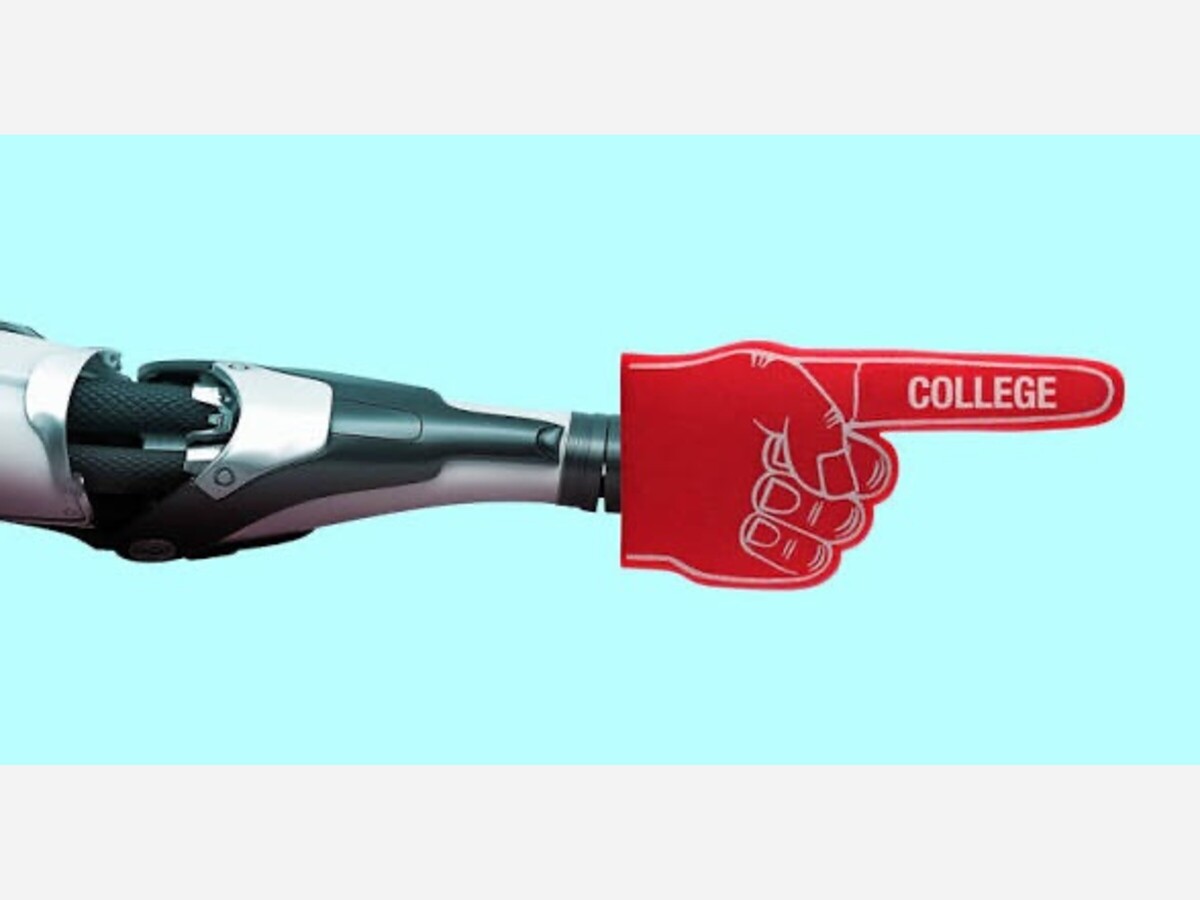
As the May 1st deadline for college decisions fast approaches for the class of 2026, it’s time for the class of 2027 is beginning to weigh what their lives will look like after high school.
For many, that path still leads to college. Historically, 62.8% of recent high school seniors in the United States immediately enrolled in college after graduation.
However, those numbers are startling. For those who do enroll, many are switching majors at record rates. These shifts are increasingly tied to the rapid progress of Artificial Intelligence.
AI is one of humanity's most impressive creations, capable of providing rapid solutions to complex problems. This product of human ingenuity has been turned into a tool for many. More specifically a tool for businesses and large corporations.
As AI becomes further integrated into various industries, many students contemplating college are picking degrees out of a new kind of fear: The fear of automation.
Degrees that were once considered to be golden tickets to a good life, like computer science, are perceived by some to be losing value with the implementation of AI
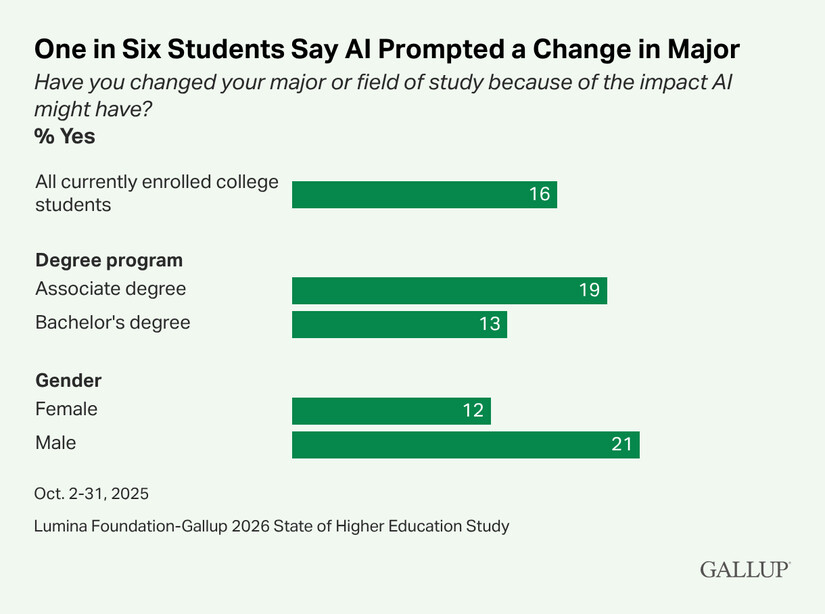
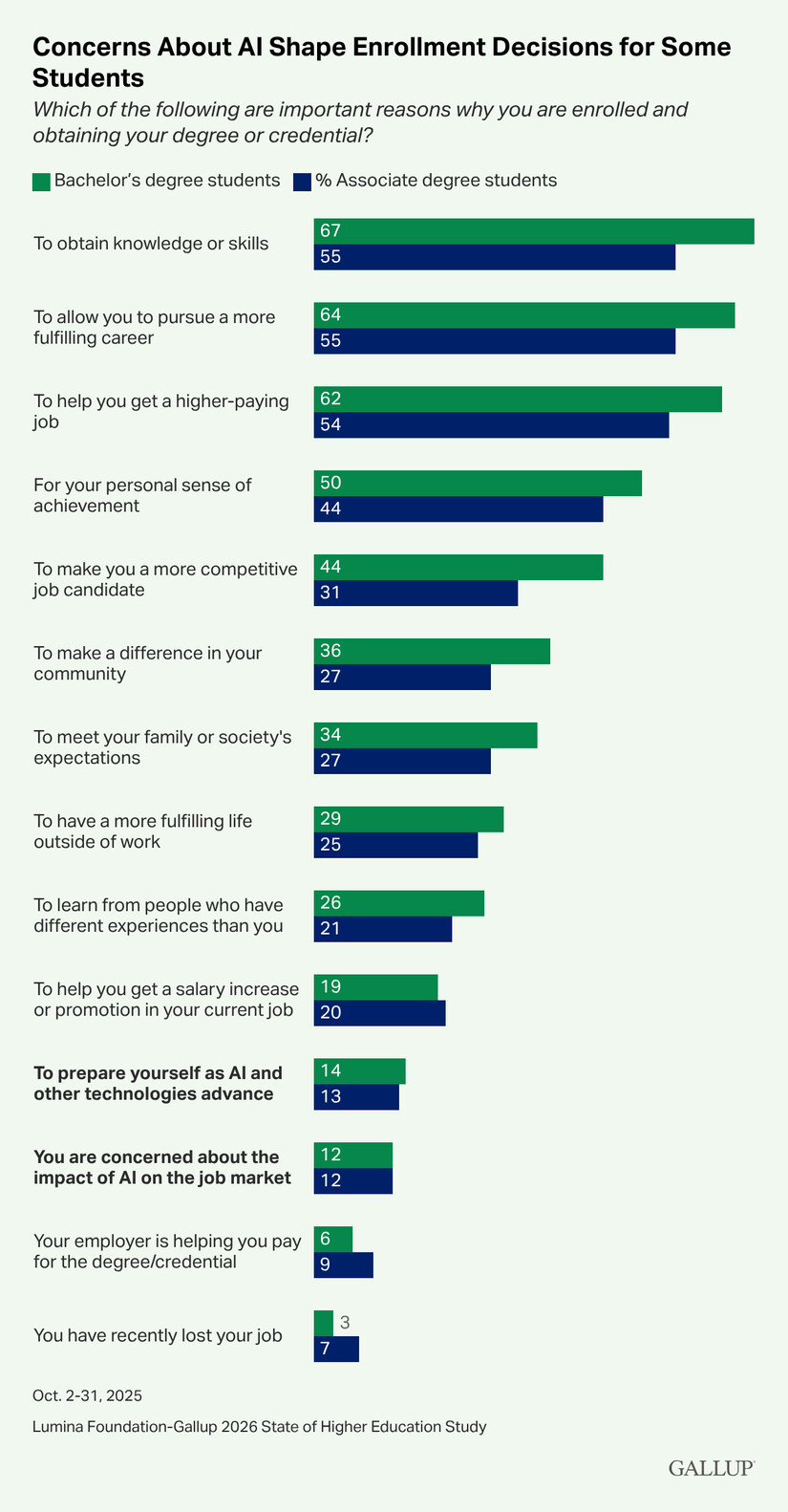
While AI is not yet the primary reason for enrollment shifts, its influence is clear. A study done by the Lumina Foundation finds that 12% of students pursuing Bachelors and Associates degrees are citing concerns about AI’s impact on the job market. Indicating that AI has already become part of how many students evaluate the role of postsecondary education in a changing labor market.
AI’s presence is becoming such a factor in students' enrollment decisions that roughly one in seven students seeking a bachelor’s degree (14%) and associate degree students (13%) say preparing for AI and other technological advances is an important reason they enrolled.
Some may question the legitimacy of their concerns, but researchers at Tufts University predict that within the next two to five years, 6% of jobs will be at risk from AI.
The concern is highest in the information sector (18%), followed by finance and insurance (16%), and professional or technical services (16%).
In February during an interview with the Financial Times, the AI chief for Microsoft stated he believes AI will take over all white-collar work in the next 18 months.
A problem that will most heavily affect younger generations. According to a Gallup poll, employment for workers aged 22 to 25 in “high exposure” AI jobs declined by 16% between 2022 and 2025 compared to older peers.
As more and more industries begin to implement AI into their workforce, once reliable career paths are being disrupted. This “AI epidemic” is rapidly spreading, and students are noticing. Fear over future financial stability is at an all time high. If colleges and universities cannot find a way to keep students enrolling; soon enough it won't just be jobs that AI is taking, but the livelihoods and aspirations of the next generation.