Image
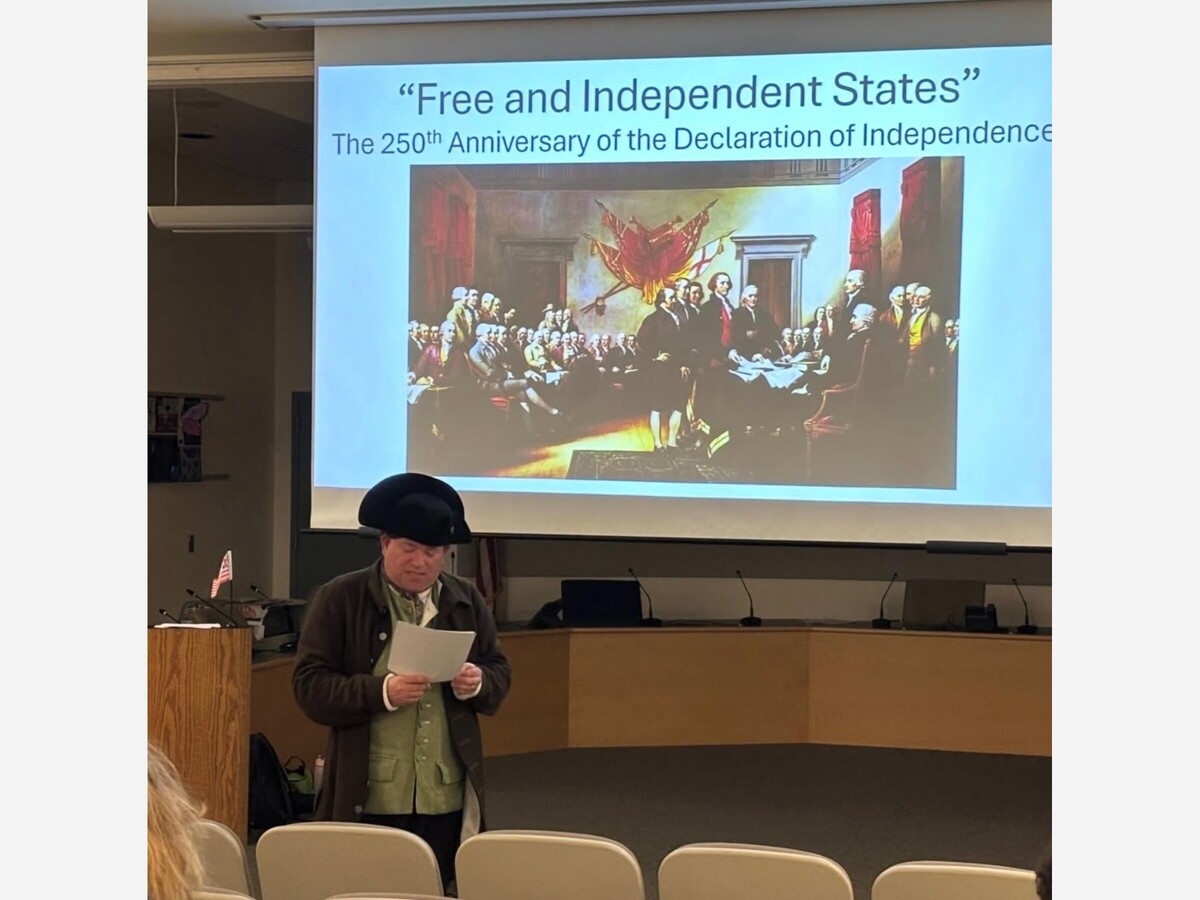



The curriculum of a US history course in high school takes a look at the actions, events, and important people that shape the history of the United States. It helps students understand the causes and effects of important documents, events, and figures who serve as the foundational bricks of their homeland's history. Just like how every house is built by laying the first brick, every nation is founded upon uniting principles. A point most evidently acknowledged at Nashua High School North on Tuesday, May 19th, during Rho Kappa’s,—the school's social studies honors society—, Honors Symposium: Free and Independent States.
It was a full-day event that contextualized the United States Declaration of Independence in honor of the document's upcoming 250th anniversary.
Composed of four 50-minute modules, the symposium put a magnifying glass on the events leading to the creation of the Declaration of Independence and why it answered the colonies' ongoing problems. Each module focused on specific topics related to the event's overarching goal: investigating the unspoken and sometimes forgotten context around the Declaration of Independence.
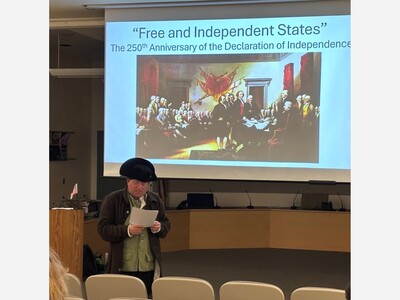
7:45 am marked the beginning of the symposium. Approximately 40 hand-selected students from both Nashua North and South arrived at the lecture hall for the keynote address, delivered by the event organizer and head of Rho Kappa, social studies teacher Charles Ziniti. His speech highlighted that the Declaration is more than just some paper from which we quote high ideals; it represents the conditions that made it necessary to capture a complex argument and justification in its 1,320 words. It also set the tone for the day's events, which Mr. Ziniti outlined before dismissing the students to their module groups for their first session.
Module A, held in the career center, was led by Elizabeth Thomson, who, from 2003 to 2017, worked at Nashua North, teaching various subjects including AP European History, AP World History, US History, World Studies, and Modern European History. Titled ‘Redress in the Most Humble Terms,’ the session explored whether or not reconciliation or rebellion would take place between Britain and its American colonies from 1775 to 1776.
Throughout the career center were various first- and secondhand sources from both American and British perspectives that students were able to read and use to determine if either reconciliation was possible or if rebellion was the inevitable path to freedom.
Module B, titled ‘A History of Repeated Injuries: The Grievances Against King George III,’ took place in the library’s periodicals room. The session was led by Dr. Martin Menke, Rivier University’s Director of History and Political Science programs and the Director of Secondary Social Studies Education. In this session he lectured on Great Britain’s denial of colonial representation in Parliament, shifting mercantilist policies which limited colonial trade, which in turn caused the colonies to begin smuggling as a form of economic resistance against the British Crown.
Module C focused on US foreign relations from 1776 to 1783. Titled ‘A New Constellation: Independence and US Foreign Relations’ it was run by Mr. Ziniti. This module consisted of audience participation, with one member of the audience being chosen to perform the role of John Hancock presiding over a debate of the Second Continental Congress.
The majority of the module consisted of a reenactment— performed by Mr Ziniti and Rho Kappa member Dakota Richardson- of the Continental Congresses debate over allying with France. The reenactment was created by Mr Ziniti and it consisted of quotes from various first— and secondhand accounts of the real Continental Congress's debate over choosing either Arthur Lee's or John Adams's approach to allying with France. Audience members served as members of the Continental Congress and were able to vote on whose approach they agreed with more. This short reenactment was followed by a short lecture and Q&A on US foreign relations.
Module D was the final module of the day, but before this could commence, lunch was served by the North Star Cafe, who provided sandwiches, potato and pasta salad, cookies and light refreshments amongst other snacks for the students to enjoy. Shortly after this recess, students met with Mr. Andy Otocka, Nashua North's AP US History, Crime and Justice in America, US History, and Diversity in America teacher. His module titled ‘All Men are Created Equal: Slavery and the Declaration of Independence’ highlighted slavery's influence and relationship with the words of the Declaration of Independence. Showcasing the hypocrisy of some of America's most famous ideals and giving insight into what the declaration could have been if the country wasn't so divided by slavery and the definition of a man.
The symposium's festivities rounded out with an analysis activity where students reviewed the day's materials and came together to discuss their newfound knowledge and context of the Declaration of Independence. The event beautifully captured how the ideals of the declaration came to be and the two-sided nature of American history. It did not shy away from giving outside perspectives of other nations especially during modules B and C.
While the event was primarily staffed by high school educators, who provided comprehensive and unbiased information. However they didn’t hesitate to bring in outside voices from the community as well. The symposium's organizers reached out to multiple college professors and even the state governor in hopes of her delivering the keynote address; alas, the majority declined or did not respond. Despite these absences, the Honors Symposium accomplished its goals. . Students left this event with a deeper understanding about the Declaration's history, and Rho Kappa successfully demonstrated that history extends far beyond what their US history book tells them.